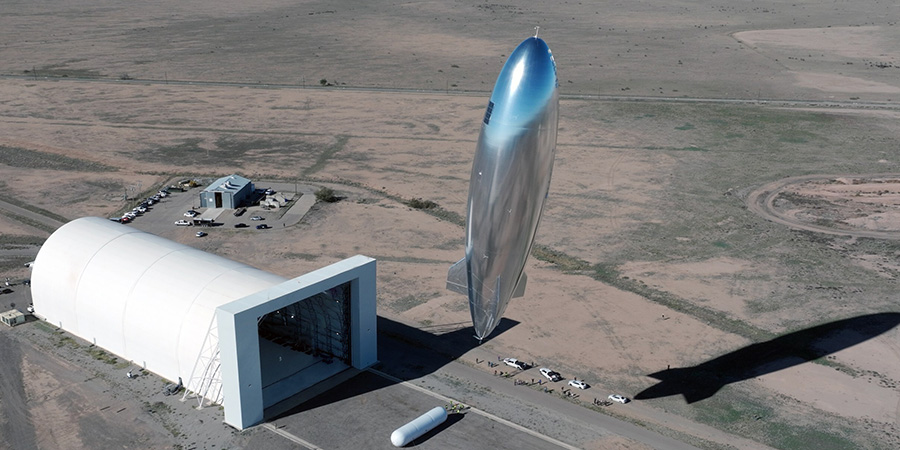
Sceye and Softbank Sceye And Softbank: Inside The Haps Collaboration For Japan
1. This Partnership Is More Than Connectivity
In the event that two firms with different backgrounds which include a New Mexico-based stratospheric aerospace business and one of Japan’s top telecoms conglomerates – agree to build a nationwide network of high-altitude platform stations, the scope of the project is much bigger than broadband. It is clear that the Sceye SoftBank partnership represents a genuine bet on stratospheric infrastructure to be a continuous, profitable layers of telecommunications across the nationand not just a pilot project or demonstration of concept. Rather, this is rather the beginning of a commercial rollout with a timetable and a country-scale ambition.
2. SoftBank Has a Strategic Reason to invest in Non-Terrestrial Networks
This interest of SoftBank’s in HAPS wasn’t just a blip on the radar. Japan’s geography — millions of islands, mountainous terrain and coastal zones frequently devastated by earthquakes or typhoons — creates persistent coverage gaps that the ground infrastructure alone can’t close economically. Satellite connectivity helps, but cost and latency remain the main components for mass-market application. An stratospheric level of 20 kilometres and occupying a position above specific regions and delivering broadband at low-latency to standard equipment, solves a lot of these issues at once. For SoftBank investing on stratospheric-based platforms is a natural expansion of the existing strategy that seeks to diversify beyond terrestrial network dependency.
3. Pre-Commercial Service Plans for Japan in 2026, which will signal a real Momentum
The primary point of difference that separates this partnership from earlier HAPS announcements is that the partnership will target the introduction of pre-commercial services in Japan for 2026. This isn’t some vague future commitment, but a specific operational milestone that has regulatory, infrastructure, and commercial implications attached to it. Pre-commercial status means that the platforms must perform station keeping reliably, delivering satisfactory signal quality, and in a way that is compatible with SoftBank’s already existing network structure. The time frame at which this date has been announced publicly suggests both parties have cleared the technical and regulatory groundwork so that it is an achievable goal, not aspirational marketing.
4. Sceye provides endurance and payload Capacity, which other platforms struggle to Match
Not every HAPS vehicle is designed to be part of an extensive commercial network. Fixed-wing solar aircraft generally sell payload capacity in exchange of high altitude performance, which limits the amount of telecommunications or other observation equipment they can transport. Sceye’s airship is lighter than water and uses a different approach — buoyancy helps carry the vehicle’s weight so that any solar power is utilized for propulsion or station maintenance, as well as the powering of onboard systems instead of simply remaining in the air. This architectural decision translates into meaningful advantages in payload capacity and endurance of missions, both of which matter in the event of trying to keep a continuous supply of power over dense areas.
5. The Platform’s Multimission Capability Does the Economic Work
One of the lesser-known aspects of the Sceye approach in that any single device doesn’t need to justify its operation cost purely through telecoms earnings. The same vehicle that delivers stratospheric broadband can simultaneously carry sensors for monitoring greenhouse gases as well as disaster detection also earth observation. In a country such as Japan as a country that faces a large natural catastrophe risk and has national commitments regarding monitoring emissions the multi-payload model helps the infrastructure to justify at a government as well as a commercial level. The antennas for telecoms and climate sensor don’t have to competethe two are sharing a platform and are already on the same platform.
6. Beamforming along with HIBS Technology Make the Signal Commercially Usable
In order to offer broadband service from 20 miles away, it isn’t simply a matter of moving an antenna downwards. The signal has to be shaped, directed and managed dynamically to support users efficiently across a larger space. Beamforming technology can allow the stratospheric communications antenna for the focus of signal energy those who are in the greatest need, instead of broadcasting the same way and wasting energy over the empty areas of ocean or uninhabited terrain. Combined with HIBS (High-Altitude IMT Base Station) standards, which make the platform compatible existing 4G and 5-G device ecosystems, ordinary smartphones can be connected without the need for special equipment — a critical prerequisite for any mass-market deployment.
7. The Japanese Island Geography Is an Ideal Test Case for the rest of the world
If the stratospheric network works at a large scale in Japan this template is adaptable to every other country that faces similar coverage challengeswhich is the majority countries around the globe. Indonesia is one of them. The Philippines, Canada, Brazil, and numerous Pacific island nations face variants of the same issue which is the spread of people across terrain that defeats conventional infrastructure economics. Japan’s mix of technological sophistication along with regulatory capacity and genuine need for geography provides it with the highest possibility of proving ground for an all-encompassing network built on stratospheric platforms. The lessons that SoftBank and Sceye demonstrate here will guide deployments elsewhere over the next few years.
8. It is clear that the New Mexico Connection Matters More Than It Appear
Sceye operating out of New Mexico isn’t incidental. The state offers high-altitude testing conditions, a well-established technology for the aerospace industry, and airspace that’s suitable for extended flight testing that vehicle development requires. Sceye is among the more serious aerospace firms located in New Mexico, Sceye has created its development program in the context of genuine engineered iterations, not press release cycles. The gap between announcing a HAPS platform and actually maintaining an ongoing station for weeks each time is immense, however, and Sceye’s New Mexico base reflects a company which has been putting in the unglamorous work required to close the gap.
9. Founder Vision has shaped the Partnership’s Long-Term Ambition
Mikkel Vestergaard’s background of applying technology to humanitarian and environmental challenges — has definitely been a major influence on what Sceye is working to create and the reasons. The collaboration with SoftBank isn’t only a business telecoms deal. Sceye’s focus upon disaster-prevention, monitoring in real-time, and connectivity for underserved regions is a reflection of a guiding principle that the stratospheric infrastructure must serve large-scale social and economic needs in addition to commercial ones. The way it is framed has likely made Sceye a more desirable partner for a business like SoftBank that operates in a strict regulatory and public setting where the corporate goals are a real factor.
10. 2026 is the Year when to be Stratospheric Tier either proves itself or Resets Expectations
The HAPS sector has been promoting commercialization for a longer time than many observers would like to think. What is unique about Sceye and SoftBank’s timeline Sceye and SoftBank timetable so important is that it assigns the specific country, a specific operator, and a service milestone to a specific year. If pre-commercial service offerings in Japan are launched on time and work as promised 2026 is that the moment when global connectivity has shifted from promising technology to functional infrastructure. If the infrastructure fails to function, the sector will have to answer more questions concerning whether the technical challenges can be solved from the perspective of recent declarations. The partnership has created a line in the sky worth watching. Take a look at the recommended sceye greenhouse gas monitoring for blog info including Real-time methane monitoring, Closed power loop, stratospheric internet rollout begins offering coverage to remote regions, High altitude platform station, Cell tower in the sky, sceye haps softbank japan 2026, space- high altitude balloon stratospheric balloon haps, what does haps stand for, sceye haps airship status 2025 2026, Beamforming in telecommunications and more.

Wildfire and Disaster Detection From The Stratosphere
1. The Detection Window is the most Useful Thing You’ll Be able to Extend
Every major disaster is accompanied by a moment that can be measured as seconds, sometimes it’s hours — where early awareness would have changed the course of action. When a wildfire is identified, it covers half a hectare is the problem of containment. A fire that is detected when it covers fifty acres is a major crisis. An industrial gas leak detected within the first two hours could be secluded before it turns into a public health emergency. A similar release detected three hours later through an incident report on the ground or a satellite passing overhead on its scheduled visit, has already transformed into a catastrophe with no clean solution. Expanding the detection windows is probably the most significant improvement that monitoring infrastructures with improved capabilities can provide, and continuous stratospheric imaging is one of the few ways to alter the window to a significant degree rather than marginally.
2. It is becoming harder for wildfires to Monitor Using Existing Infrastructure
The intensity and frequency of wildfires in recent years has outpaced the monitoring infrastructure designed to track them. These detection network systems – alarm towers, sensor arrays ranger patrols, and watchtowers — are able to cover a small area too quickly to contain fast-moving fires, particularly in their initial stages. Aircraft responses are effective, but costly, weather dependent and reactive rather anticipatory. Satellites move over a location on a schedule measured in hours, which implies that a fire that starts or spreads between passes doesn’t provide early warning whatsoever. The combination of larger fires that spread faster, accelerated rates of spread caused from drought-related conditions and increasingly complex terrain creates monitoring gap that traditional approaches are unable to bridge structurally.
3. Stratospheric Altitude Provides Persistent Wide-Area Visibility
A platform that operates at 20 kilometers above the surface is able to maintain a continuous view over a terrain footprint that extends hundreds of kilometers protecting fire-prone areas, coastlines as well as forest edges and urban interfaces at the same time and without interruption. Contrary to aircrafts it doesn’t have to turn back for fuel. Unlike satellites, it doesn’t disappear off the horizon when on the basis of a revisit cycle. For wildfire detection in particular, this kind of continuous visibility across the entire area means that the system is in view when fires start, monitoring as the initial spread takes place, and watching for changes in fire behavior giving a constant data stream, not a succession of snapshots in which emergency managers must cross-check between.
4. Temperature and Multispectral Sensors can detect fires Before Smoke Is Visible
The most effective technologies for detecting wildfires doesn’t have to wait for visible smoke. Thermal infrared sensors identify heat signs that may indicate ignition long before an incident has produced any visible signature It can identify hotspots among dry vegetation and smouldering flames that are under the canopy of trees, and the early evidence of the heat signature that indicates fires are just beginning to form. Multispectral imagery adds additional functionality to detect changes in vegetation situation — moisture stress dryness, browning, and dryingindicators of increased risk of fire in particular areas prior to the occurrence of any ignition event. A stratospheric system that incorporates this sensor set-up provides an early warning about active ignition and predictive intelligence about where the next fire will occur. This offers a qualitatively broader range of awareness of the situation than traditional monitoring delivers.
5. Sceye’s Multi-Payload Approach Combines Detection With Communications
One of the most common complications during major catastrophes is that the infrastructure we rely on for communication including mobile towers power lines, internet connectivity is typically one of the first items to be destroyed or overwhelmed. A stratospheric platform with both emergency detection sensors as well as a telecommunications payloads tackle this issue from a single vehicle. Sceye’s approach to mission design considers observation and connectivity as mutually beneficial functions, not rival ones. That means the similar platform that detects the rapidly growing wildfire can also provide emergency communications to responders on the ground whose terrestrial networks have gone dark. The cell tower in the sky does more than just observe the disaster — it keeps people connected via it.
6. In the event of a disaster, detection extends far beyond Wildfires
While wildfires constitute one of the most compelling scenarios for persistent stratospheric monitoring, the same platform’s capabilities work in a larger range of disaster scenarios. Floods can be monitored as they develop across flood zones, river systems, and coastal zones. Earthquake aftermaths — which include the deterioration of infrastructure, blocked roads and displaced communitiesget the benefit of a quick wide-area evaluation that ground teams are unable to offer in a timely manner. Industrial accidents that release toxic gases or oil pollution in the coastal waters leave traces visible to sensors that are able to detect them from the stratospheric height. Finding out about climate catastrophes at a moment’s time across the categories of weather requires a monitoring layer that is present in constant observation and able to distinguish between normal variations in the environment and the signs of emerging disasters.
7. Japan’s unique disaster history makes the Sceye Partnership Especially Relevant
Japan experiences a large share of the world’s major seismic storms, and is regularly hit by the occurrence of typhoons in coastal areas, and is a victim of witnessed a number of industrial accidents that require swift environmental monitoring. The HAPS partnership between Sceye and SoftBank will target Japan’s massive system and its pre-commercial service in 2026 is directly between stratospheric connectivity with disaster monitoring capabilities. A country with Japan’s high disaster exposure and its level of technological sophistication is perhaps the first natural early adopter for stratospheric infrastructure that combines robust coverage with real time observation that provides both the backbone of communications that disaster response depends on and the monitoring layer which early warning systems require.
8. Natural Resource Management Benefits From the same Monitoring Architecture
The ability to detect and persist that make stratospheric platforms a great choice in preventing wildfires and detecting disasters have direct applications in natural resource management that operate at longer intervals, but require the same monitoring consistency. Forest health monitoring — which tracks the spread of diseases in the form of illegal logging, vegetation changes — reaps the benefits of an ongoing monitoring system that detects slow-developing hazards before they reach acute. Water resource monitoring across vast catchment areas, coastal erosion tracking, and the surveillance of protected areas against interference all have applications where an spherical platform that is constantly monitoring provides actionable information that regular airborne or satellite surveys can’t replace in a cost-effective manner.
9. The Founder’s Mission Shapes Why It is essential to identify disasters.
Understanding the reasons Sceye insists on environmental monitoring and detection of natural disasters in lieu of treating connectivity as the sole purpose and observation as a side benefitand that requires understanding the founder approach that Mikkel Vestergaard was the founder of the company. A background in applying sophisticated technology to tackle large-scale humanitarian challenges results in a different set goals than a commercial-oriented telecommunications strategy would. It isn’t installed on a connectivity device as a benefit-added feature. It’s a result of a belief in the fact that stratospheric structures should be actively utilized in the face of all kinds of challenges — climate emergencies, environmental disasters emergencies that require more timely and accurate information alters the outcomes for those affected.
10. Persistent Monitoring Changes the Relationship between Data and Decision
The more fundamental shift that catastrophe detection at the stratospheric level enables isn’t just the faster response time to events that occur in isolation — it’s a change in how decision-makers relate to the risks of the environment across time. When monitoring is intermittent the decision about deployment of resources, evacuation planning, as well as infrastructure investment have to be made with a lot of uncertainty regarding existing conditions. If monitoring is constant this uncertainty increases dramatically. Emergency managers working with an in-real-time data feed from a permanent stratospheric system above their areas of responsibility are making their decisions from a very different point of view than those who rely on scheduled satellite passes or ground reports. The change from periodic snapshots to constant situational awareness — is the thing that makes stratospheric Earth observation from platforms like those being developed by Sceye is truly transformative and not incrementally useful. Have a look at the most popular sceye haps project for site advice including softbank satellite communication investment, Sceye Founder, softbank haps, sceye haps airship status 2025 2026 softbank, HAPS technology leader, sceye haps status 2025, sceye softbank partnership, sceye connectivity solutions, Sceye stratosphere, softbank satellite communication investment and more.